Guide · Traffic analytics
What Direct Traffic Really Means (It's Rarely Typed URLs)
Direct traffic in GA4 and other tools mostly means "source unknown". Where it really comes from, how to shrink it, and how to stop it taking credit for sales.
· 3 min read
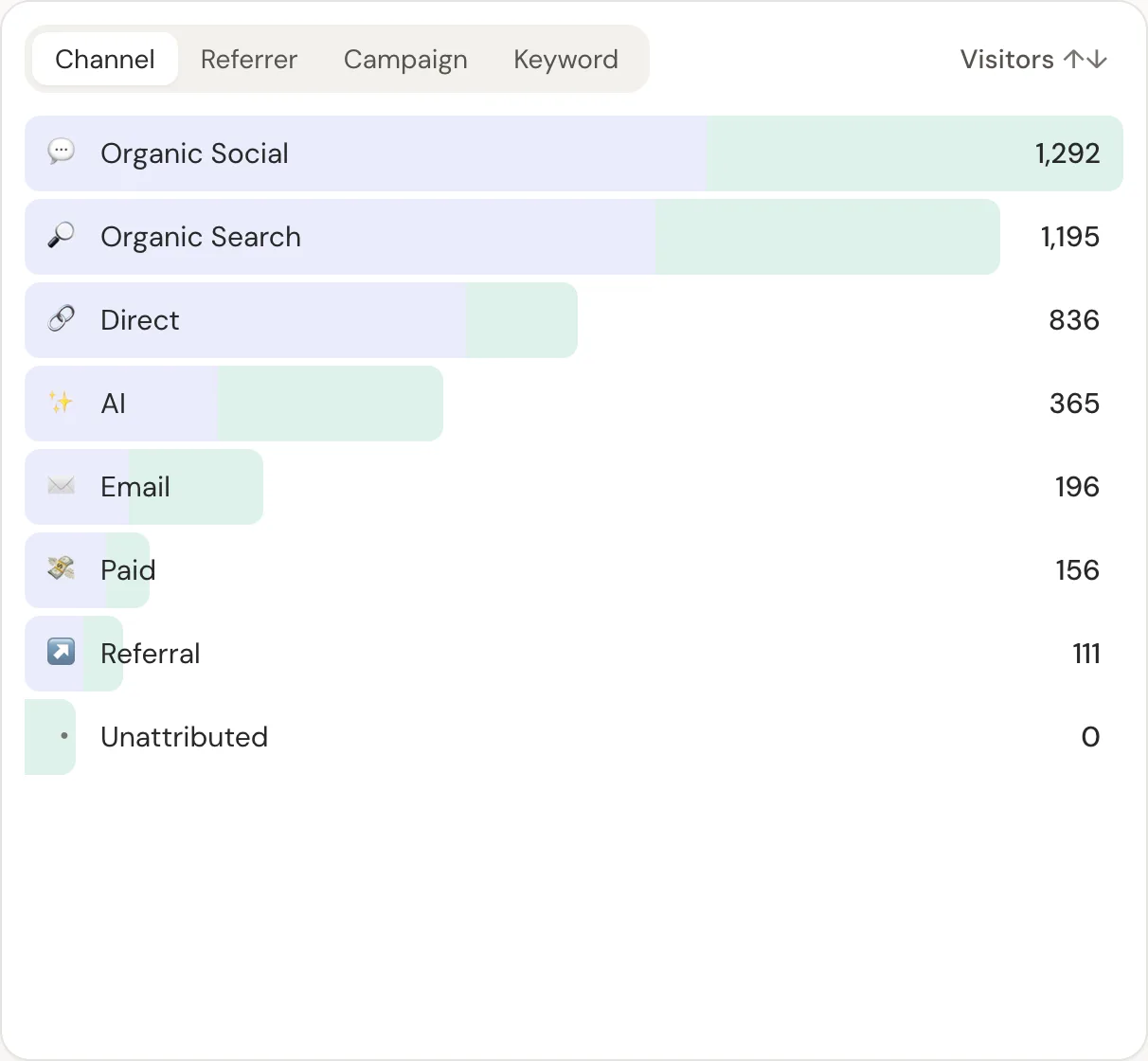
"Direct" sounds like people typing your address into the browser. Some of it is. Most of it is something less tidy: a visit that arrived without a referrer or tags, so your analytics can't say where it came from. It's a bucket for "unknown".
Where direct traffic really comes from
- Typed URLs and bookmarks. The real direct visits. Usually returning customers and people who heard your name.
- Email apps. Desktop and mobile mail clients often send no referrer.
- Chat apps. Slack, WhatsApp, Telegram, Discord, iMessage: links shared in messages (dark social).
- Mobile apps. In-app browsers in social and AI apps often drop the referrer, including many ChatGPT app clicks.
- Documents and PDFs. Links in slides, docs and files.
- Redirects that lose information, such as
httptohttpshops that drop the query string. - Privacy settings and browsers that strip referrers.
How to tell what's in it
Look at which pages get direct traffic:
- Direct visits to your homepage and login page are mostly real direct: people who know you.
- Direct visits to a long, specific article URL are rarely typed. That's shared links or AI apps.
A rise in direct visits to one deep page, the same week someone shared it in a community or an AI assistant started citing it, tells you where it came from.
How to shrink it
- Tag every link you share with UTM parameters: emails, social posts, PDFs, partner links. How UTM parameters work.
- Fix redirects so they keep the query string.
- Ask customers "how did you hear about us?" to name what tags can't see.
You'll never get it to zero, and that's fine.
Don't let direct take credit for sales
The biggest damage from direct traffic is in attribution. A customer finds you via a newsletter, then types your URL to buy. A last-click model credits "direct", and the newsletter looks worthless.
DataFair credits the last visit that came from somewhere, skipping direct visits, so that sale goes to the newsletter. First touch vs last touch explains the models.
Related guide: Revenue analytics: measure what pays, not just what visits.
Questions
- What does direct traffic mean in GA4?
- Sessions where GA4 found no referrer, no UTM tags and no other source information. GA4 labels the source (direct) and the medium (none).
- Is high direct traffic bad?
- Not by itself. Strong brands get lots of real direct visits. It's a problem when tagged campaigns or shared links end up there and hide what's working.
- Why did my direct traffic suddenly increase?
- Common causes are a link shared in chat apps or newsletters, AI apps citing a page, a broken redirect dropping UTM tags, or bot traffic.