Guide · Revenue attribution
How Did You Hear About Us? Answer Options, Template and Tips
A ready-to-copy list of answer options for the "how did you hear about us" question, where to ask it, and how to combine the answers with your analytics.
· 3 min read

Analytics sees clicks. It can't see the podcast someone heard on a run, the friend who recommended you, or the Slack message with your link. One question can: "How did you hear about us?" This is called self-reported attribution, and it's the cheapest way to fill the gaps in your tracking.
Answer options you can copy
Keep it short, and put the options in a random order so the first one doesn't get extra clicks:
- Google or another search engine
- ChatGPT, Claude, Perplexity or another AI assistant
- X (Twitter)
- YouTube
- A podcast
- A newsletter or blog
- A friend or colleague
- Product Hunt or Hacker News
- An ad
- Other (please tell us)
Add a short free-text box after "Other", and consider one after "A podcast" or "A newsletter" so people can name it. The names are the gold.
Where to ask
- After signup or purchase, on the thank-you page or in onboarding. Asking before checkout adds friction to the step that matters most.
- Optional, never required. Forced answers are guesses.
- Once. Don't ask again on every login.
What to do with the answers
Self-reported answers and tracked sources disagree, and that's the point. Put them side by side:
| Analytics says | Customers say | |
|---|---|---|
| Typical pattern | Lots of "direct" and "Google" | "A podcast", "a friend", "a newsletter" |
| What it means | The last click was search or typed | The real discovery happened somewhere no tracker sees |
Two common findings:
- "Direct" is word of mouth. If customers often say "a friend" while analytics says "direct", your referral engine is working.
- Search is the second step. People hear about you elsewhere, then search your name. Branded search is credited, the real source isn't.
Combine it with tracked revenue
Self-reported answers tell you *where people first heard*. Tracked attribution tells you *which visit brought them back to buy* and what they paid. Together they're far more reliable than either alone.
DataFair handles the tracked side: each payment is credited to the last visit that came from somewhere, with revenue per channel. You can also record the answer as a goal with a property, such as datafair('goal', 'heard_about', { answer: 'podcast' }), so it sits next to your other goals. How tracked attribution works.
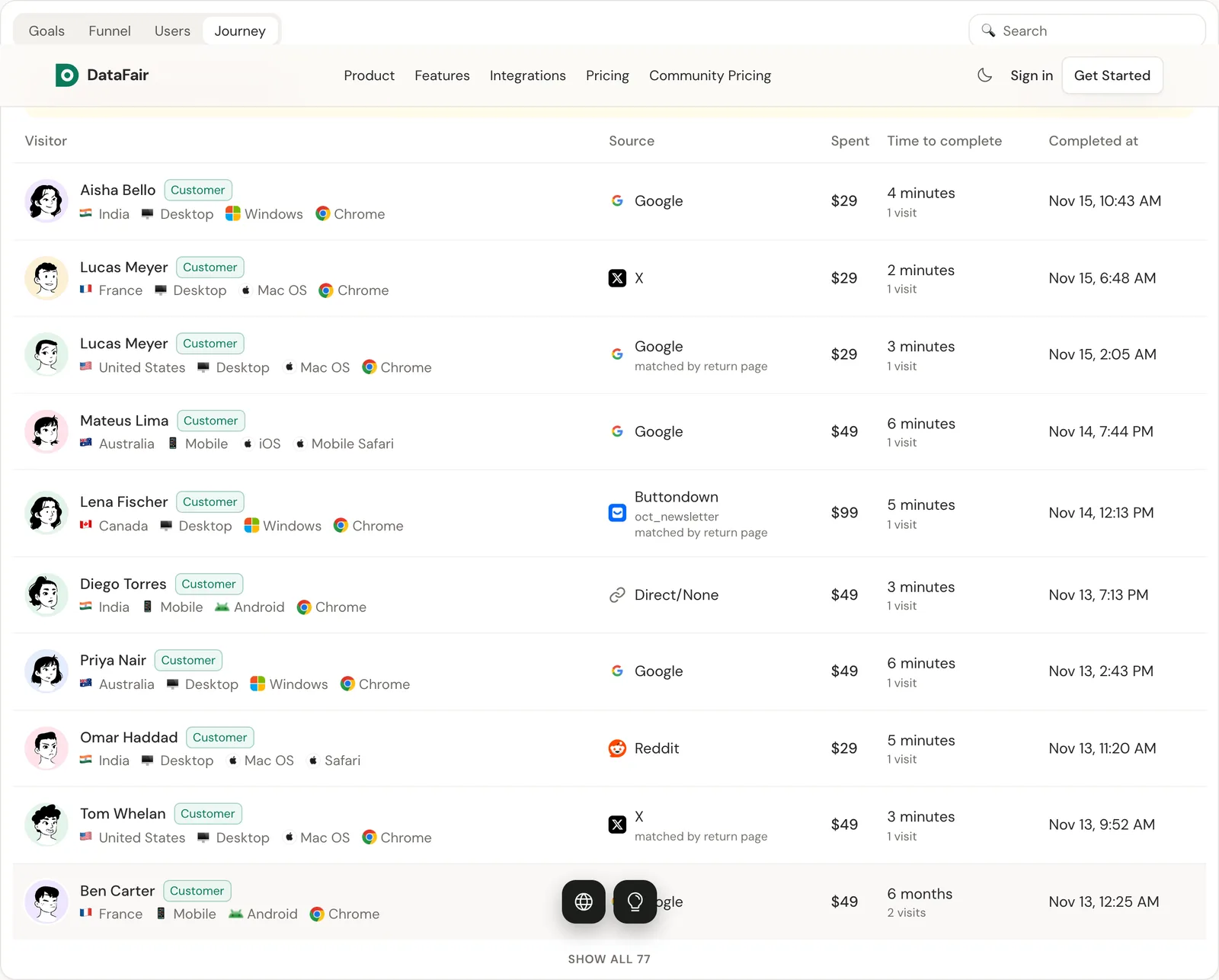
Then use both when you pick your best channel.
Related guide: Revenue attribution for every payment provider.
Questions
- Is "how did you hear about us" a reliable source?
- It's honest but imprecise: people remember the most memorable touch, not every one. Use it to find channels tracking can't see, not to replace tracking.
- Should the question be required?
- No. Optional answers are better quality. Required fields get random clicks.
- What is self-reported attribution?
- Asking customers directly how they found you, instead of inferring it from clicks.