Guide · Revenue attribution
How to Find Your Best Marketing Channel in 30 Days
A four-week plan for small teams to find the marketing channel that brings paying customers, using revenue per visitor instead of traffic.
· 3 min read

"Which channel should I focus on?" is the question every founder asks, and most answer it with traffic numbers. Traffic tells you where attention comes from. It doesn't tell you where money comes from. Here is a four-week plan that does.
Week 1: make every channel visible
You can't compare channels you can't see. Before judging anything:
- Tag every link you share with UTM parameters: newsletter issues, social posts, community posts, guest posts, ads. Use one naming scheme (
utm_source=newsletter, notNewsletterone week andemailthe next). - Connect your payment provider to your analytics so payments carry a source. How revenue attribution works.
- Check the unattributed row. If more than a fifth of revenue has no source, fix the checkout handoff before going further.
Common gap: links in emails and chat apps arrive without a referrer and get counted as direct. Fix that first.
Week 2: write down your current spend
For each channel, note what it costs you each month, in money and in hours:
| Channel | Money | Hours | Notes |
|---|---|---|---|
| SEO articles | $0 | 12 | 2 posts a month |
| X posts | $0 | 6 | daily |
| Newsletter sponsorship | $150 | 1 | one issue |
| Google Ads | $300 | 2 | search campaign |
*An example. Your list will differ.*
Hours count. A channel that costs nothing but takes 20 hours a month is not free.
Week 3: read revenue per visitor, not visitors
After two to three weeks of clean data, open your sources and sort by revenue. Then look at revenue per visitor for each one.
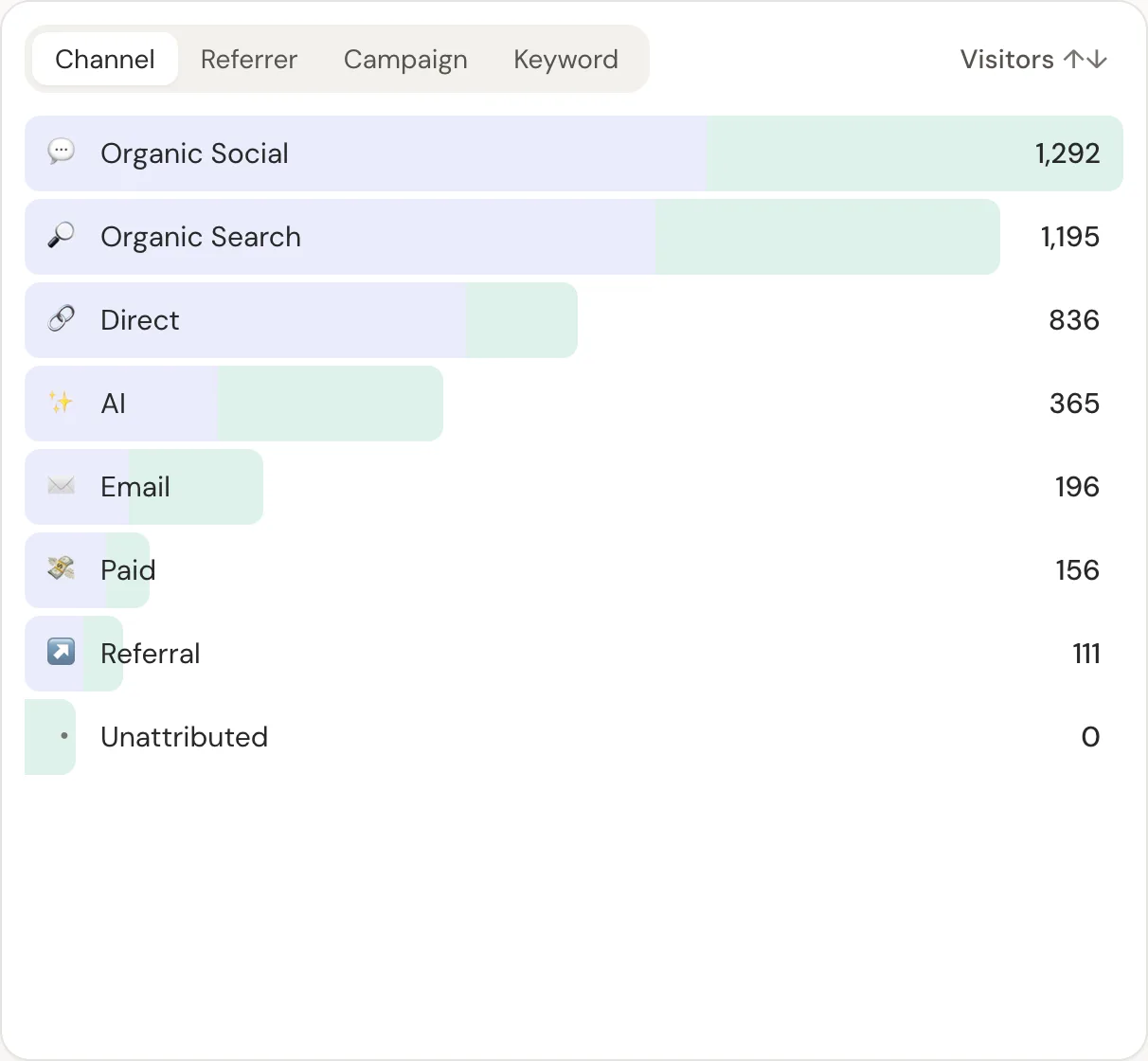
Three patterns show up again and again:
- The loud channel. Lots of visitors, little revenue. Often social media or a viral post. Keep it for awareness, but don't expect sales.
- The quiet earner. Few visitors, high revenue per visitor. Often a newsletter, a niche community or a comparison page. Grow it.
- The steady base. Organic search usually sits in the middle and compounds. Keep feeding it.
Week 4: decide with a simple score
Divide each channel's attributed revenue by its cost (money plus hours at a rate you choose). Rank them. Then:
- Double down on the top channel for the next month.
- Keep the steady base.
- Pause the bottom channel, unless it feeds the others (for example, social posts that later show up as branded search).
Recheck after a month. One month is enough to see direction, not enough for certainty.
For subscriptions, wait for renewals
A channel that brings customers who cancel after one month looks great in week 3 and poor in month 3. If you sell subscriptions, also watch recurring revenue and churn by channel.
What this plan won't tell you
- Influence without clicks. Someone who saw you on a podcast and later googled your name shows up as search. Ask new customers "how did you hear about us?" to catch it.
- Very small samples. Five sales is a signal, not a proof. Look for consistency over several weeks.
Related guide: Revenue analytics: measure what pays, not just what visits.
Questions
- What is the best marketing channel for SaaS?
- There is no general answer. The best channel is the one with the highest revenue per hour or dollar spent for your product, and it changes as you grow. Measure it rather than copying someone else's.
- How much data do I need before deciding?
- At least two to three weeks with clean tags and a connected payment provider. For subscription products, revisit after the first renewal cycle.
- Should I count hours as a cost?
- Yes. Put a rate on your time, even a rough one. It stops free channels that take all your week from looking like the best ones.