Feature · SaaS metrics
MRR by Acquisition Channel: Find the Customers Who Stay
First payments flatter channels that bring quick churners. Here's how to see recurring revenue, new subscribers and churn by the source each customer came from.
· 3 min read

For a subscription business, the first payment is the start of the story. A channel that brings 20 customers who cancel next month is worth less than one that brings 8 who stay for two years. Monthly recurring revenue (MRR) by acquisition channel shows the difference.
What it shows
For each source or channel the customer first came from:
- MRR: the monthly value of their active subscriptions
- Subscribers: how many are active, and how many are new this period
- Churn: the share that stopped paying
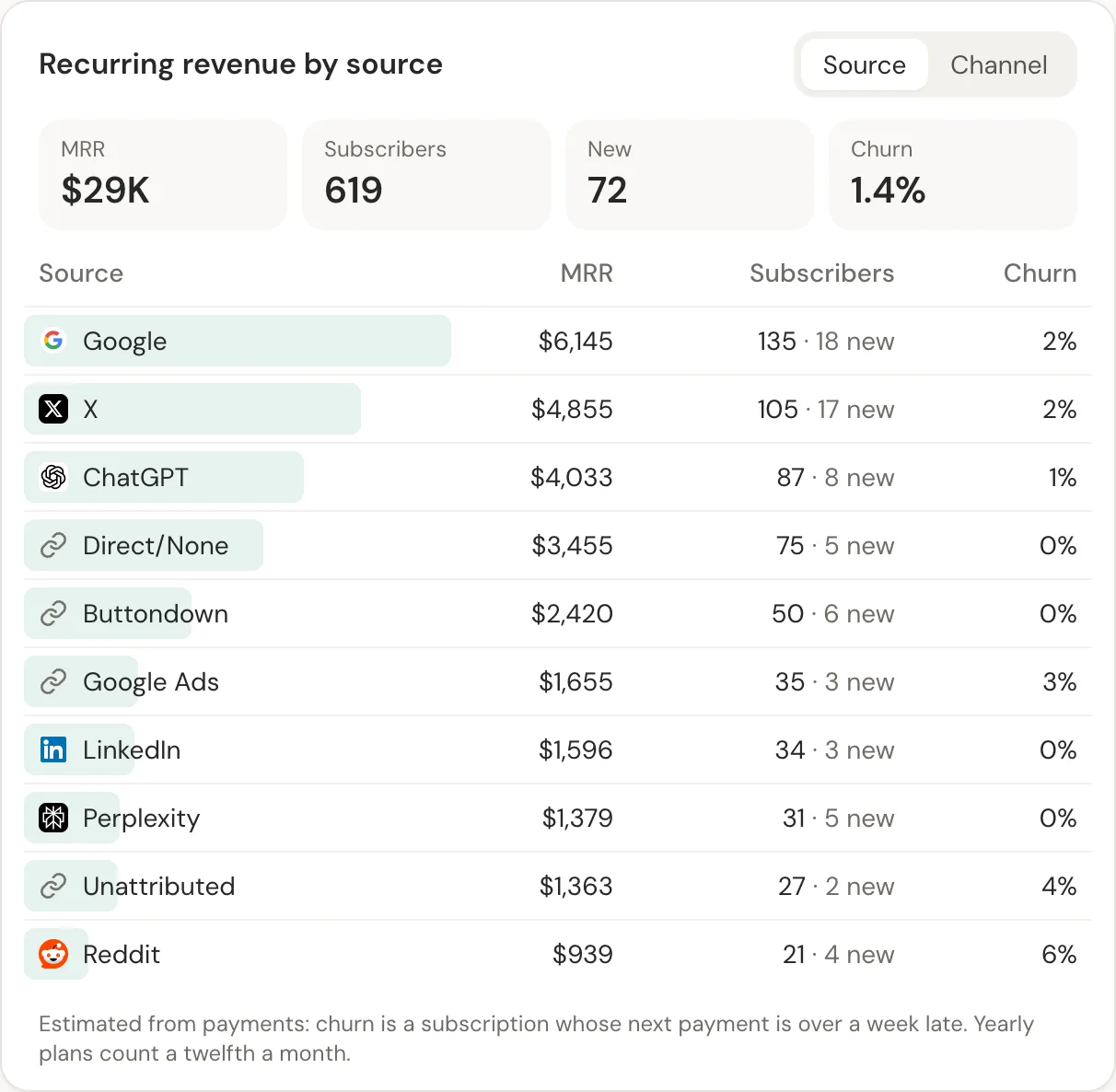
In the demo above, Google brings the most MRR, while Reddit brings fewer subscribers with higher churn. That second fact is invisible in a traffic report.
Why your billing dashboard can't show it
Stripe, Lemon Squeezy and Paddle know your MRR and churn exactly. What they don't know is where each customer came from, because the visit happened on your website before checkout. Your web analytics knows the visit but not the subscription. You need both joined:
- 1First visitThe visitor's source is recorded
- 2First paymentThe payment carries the visitor id, so the subscription gets that source
- 3RenewalsEach renewal shares the subscription id, so it keeps the same source
- 4ReportMRR, new subscribers and churn are grouped by source
How revenue attribution works explains the matching step.
How DataFair estimates it
DataFair builds recurring revenue from payments that carry a subscription id. Most providers send one, and the payments API takes a subscription_id. The rules are simple and visible:
- A subscription stays active until its next payment is more than a week late. Then it counts as churned.
- Gaps of more than 200 days between payments mean a yearly plan, which counts a twelfth of the payment each month.
- A fully refunded payment doesn't keep a subscription active.
These are estimates from payments. Your billing provider has the exact status of each subscription. What DataFair adds is the source.
How to read it
- Sort by MRR to see which sources carry the business.
- Compare churn between sources. A source with churn well above your average brings poor-fit customers, often because of a promise in the ad or post that the product doesn't keep.
- Watch new subscribers by source month over month to see which channels are growing.
- Combine with revenue per visitor to decide where to spend: high revenue per visitor plus low churn is the channel to grow.
Source or channel?
Switch between source (Google, X, a specific newsletter) and channel (organic search, social, email). Channels help with strategy, sources with tactics.
Related guide: Revenue analytics: measure what pays, not just what visits.
Questions
- Is this the same MRR as in Stripe?
- Close, but not identical. DataFair estimates MRR from payments, while Stripe reads subscription objects directly. Use your provider for exact billing figures and DataFair for which channels the revenue came from.
- Which source does a subscription belong to?
- The source of the first payment. Renewals keep it, so a customer who first came from Google stays credited to Google.
- Does it work with yearly plans?
- Yes. Gaps of more than 200 days between payments are treated as yearly, and a twelfth of the payment counts each month.