Guide · AI traffic
Does AI Search Traffic Convert? Measure It in Revenue
AI referrals are small but growing. Here is how to measure whether ChatGPT, Claude and Perplexity visitors buy, and what to do with the answer.
· 3 min read

Everyone has an opinion on AI search traffic. Some say it converts better than Google because people arrive with a recommendation. Others say it's tiny and overhyped. Both can be true for different businesses, so the only useful answer is your own number.
Why AI visitors might behave differently
People who click through from an assistant have usually asked a specific question and been pointed at you as an answer. They've often read a summary of what you do before arriving. That can mean:
- Higher intent, because the assistant already matched them to you
- Shorter visits, because they skip the reading they've already done
- Fewer visitors, because many people stop at the answer
None of that is guaranteed. Measure it.
The number to look at
Visitors from AI are easy to count and easy to misjudge. The comparison that matters is revenue per visitor for the AI channel against your site average:
AI revenue per visitor ÷ Site revenue per visitor
Above 1: each AI visitor is worth more than your average visitor
If that ratio is above 1 for two or three months running, AI visibility deserves real effort. How to calculate revenue per visitor.
How to measure it
- Group AI referrals into one channel. ChatGPT, Claude, Perplexity, Gemini, Copilot and others, by referrer and UTM source. DataFair does this automatically. In GA4 you build a custom channel group.
- Attribute payments to visits. Connect your payment provider so each sale carries a source.
- Compare like with like. Same period, revenue per visitor, AI against organic search and your average.
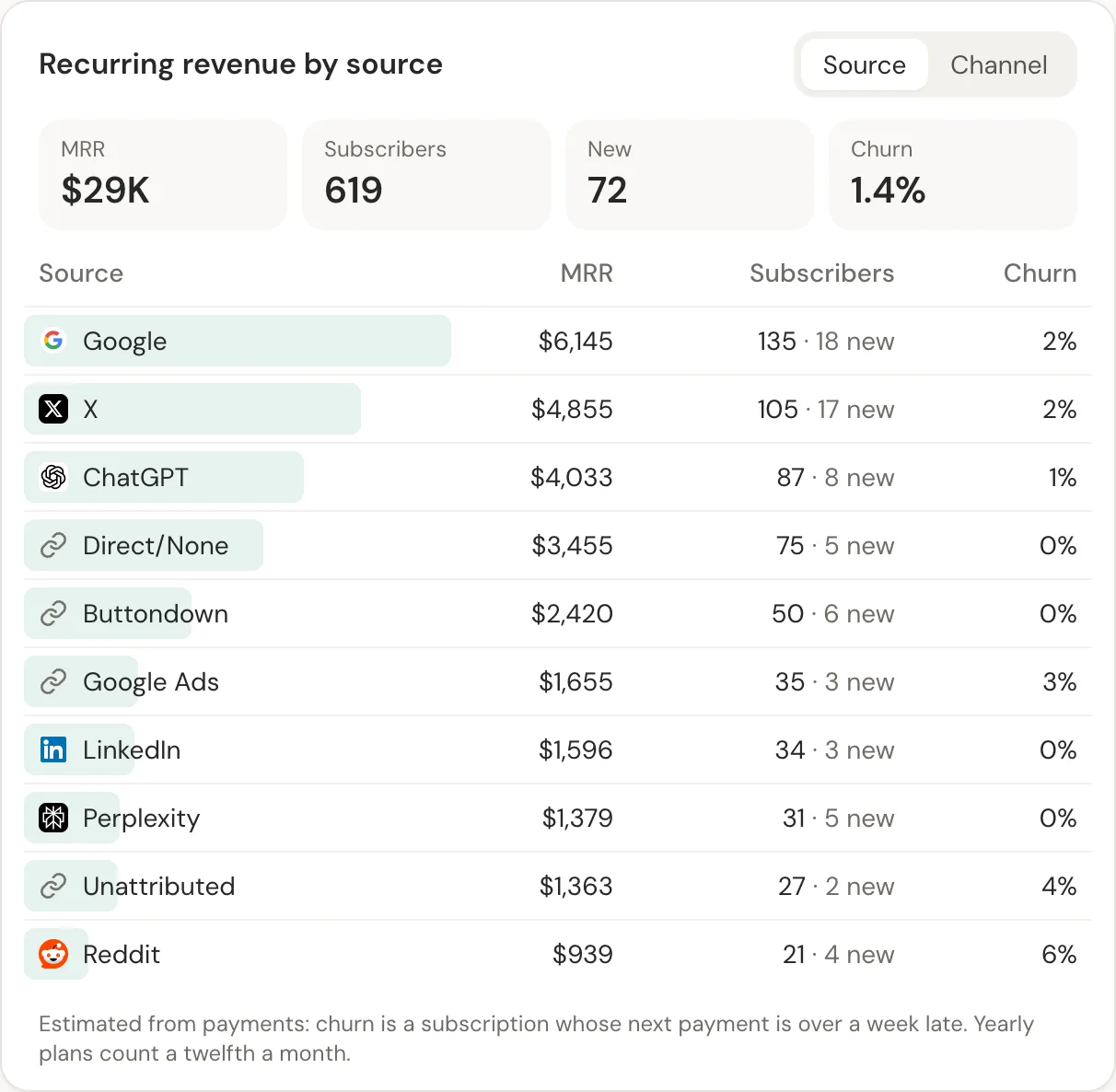
- For subscriptions, wait for renewals. MRR and churn by source show whether AI customers stay.
Remember the hidden share
Some AI clicks arrive with no referrer and land in direct, so the AI channel undercounts. If AI revenue per visitor is high on a small count, the real effect is probably larger. Watch direct visits to deep pages alongside AI crawler activity on the same pages.
What to do with the answer
If AI visitors convert well:
- Find the pages AI assistants read most. DataFair's crawler panel lists pages fetched by answer crawlers such as ChatGPT-User (the crawler list explains each).
- Improve those pages: clear answers, current prices, plain comparisons.
- Keep OAI-SearchBot, Claude-SearchBot and PerplexityBot allowed in robots.txt.
If they don't:
- Check what the assistants say about you. Ask them. Outdated pricing or a wrong description sends the wrong people.
- Don't chase it. Spend the time on the channel that pays.
Related guide: AI traffic analytics: referrals, revenue and crawlers.
Questions
- Is AI traffic better than Google traffic?
- It varies by business. Compare revenue per visitor for both channels over the same months instead of relying on general claims.
- How much traffic comes from ChatGPT?
- For most sites it's still a small share of visits, and growing. Part of it is hidden in direct traffic because app clicks often send no referrer.
- Which AI assistants does DataFair recognise?
- ChatGPT, Claude, Perplexity, Gemini, Copilot, DeepSeek and Grok are grouped into the AI channel by referrer and UTM source.