Guide · SaaS metrics
Free Trial Conversion Rate: Benchmarks and How to Measure Yours
How to calculate trial-to-paid conversion, why card-required and no-card trials can't be compared, and how to see which channels bring trials that convert.
· 3 min read
Free trial conversion rate is the share of trials that become paying customers. It's one of the most watched SaaS numbers, and one of the most misused, because two very different trial models get compared as if they were the same.
How to calculate it
Trial conversion rate = Trials that became paid ÷ Trials that ended in the period
Example: 42 paid ÷ 300 ended trials = 14%
Count trials by the period they ended, not started, or recent trials that haven't had time to convert will drag the number down.
Card required vs no card: different numbers
- Card required (opt-out): fewer people start, but a higher share convert, because they've already decided to pay unless they cancel.
- No card (opt-in): many more people start, a lower share convert, and the absolute number of customers can be higher or lower depending on your product.
Comparing a card-required trial's rate with a no-card benchmark tells you nothing. Compare like with like, or better, compare revenue per visitor across both models, which captures the full effect. Revenue per visitor explains how.
Why published benchmarks vary
Benchmarks mix trial models, prices, audiences and definitions (some count all signups, some only active trials). Use them as a rough sanity check at most. Your own trend, month over month, is more reliable.
What moves trial conversion
- Activation in the first session. The faster someone reaches the moment the product works for them, the more likely they pay.
- Trial length matched to the job. Long enough to see value, short enough to keep urgency.
- The right people starting trials. This is a marketing question, not a product one.
Trial conversion by acquisition channel
The third point is where most teams have a blind spot. A channel can produce lots of trials that never convert. Another produces fewer trials that almost all pay.
To see it, track trial starts as a goal and attribute payments to visits:
- 1VisitThe source is recorded
- 2Trial startTracked as a goal, such as data-df-goal="trial_started"
- 3First paymentArrives from your billing provider, matched to the visitor
- 4ReportTrials and revenue side by side for each channel
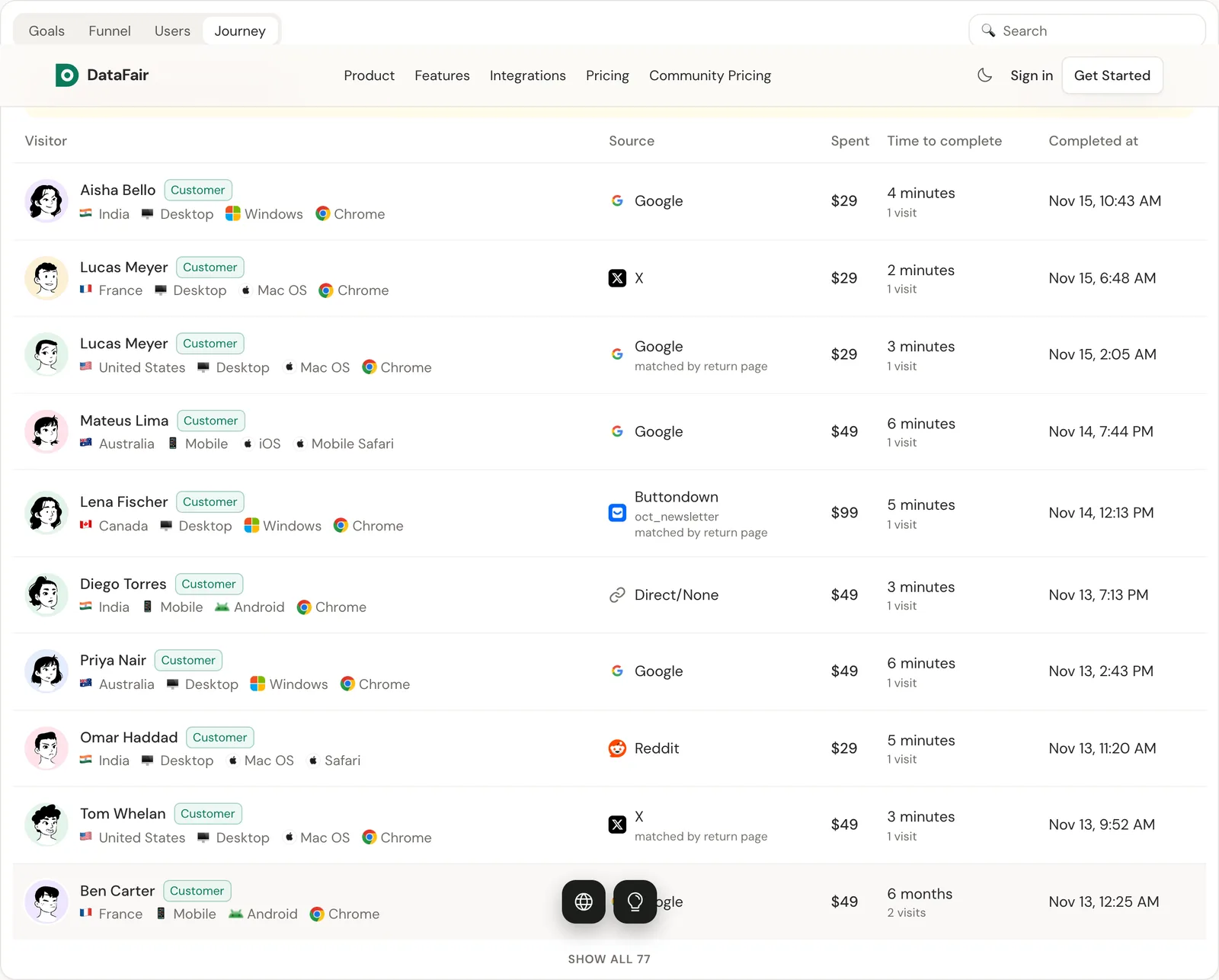
In DataFair, trial starts appear as goals per channel, and first payments and renewals appear as revenue and MRR by channel, so trial quality by source is two reports side by side. If trials convert but customers leave quickly, check churn by channel too.
Related guide: Revenue analytics: measure what pays, not just what visits.
Questions
- What is a good free trial conversion rate?
- It depends heavily on whether a card is required. Compare with businesses using the same trial model, and track your own trend.
- Should I require a credit card for a free trial?
- It's a trade-off: fewer trial starts with higher conversion, or more starts with lower conversion. Test it and compare revenue per visitor, not conversion rate alone.
- Does DataFair offer a free trial?
- No. DataFair has a 14-day money-back guarantee on the first payment instead.