Guide · SaaS metrics
What Is a Good Churn Rate for SaaS?
How to calculate monthly churn, why benchmarks vary so much, what makes a "good" number, and why churn by acquisition channel matters more than the average.
· 3 min read
"What's a good churn rate?" has a frustrating honest answer: it depends on who you sell to and how they pay. Here's how to calculate yours, what moves the benchmark, and the view that's more useful than any benchmark.
How to calculate churn
Churn rate = Customers lost during the month ÷ Customers at the start of the month
Example: 9 cancellations ÷ 300 customers = 3% monthly churn
Count only customers who were there at the start; new customers who cancel in the same month are better tracked separately. Revenue churn uses MRR lost instead of customers, and can differ a lot if large accounts leave.
Why benchmarks disagree
Published churn benchmarks range widely because they mix very different businesses:
- Who you sell to. Products for larger companies usually churn less than products for individuals and very small businesses, whose own businesses come and go.
- Price. Cheap monthly plans churn more than considered purchases.
- Billing period. Yearly plans only "churn" at renewal, which lowers monthly churn figures.
- Product type. Tools used daily churn less than occasional-use products.
So compare yourself with businesses like yours, and with your own past months. Treat any single benchmark number as directional.
Signs your churn is a problem
- It's rising for three months in a row.
- Customers leave in the first month or two, which usually points to a gap between what was promised and what the product does.
- New customer growth barely covers losses, so MRR is flat despite healthy signups.
The more useful view: churn by acquisition channel
The average hides the most actionable pattern. Customers from some channels stay; customers from others leave quickly. An ad that promises something the product doesn't do brings customers who churn. A detailed comparison article brings customers who knew what they were buying.
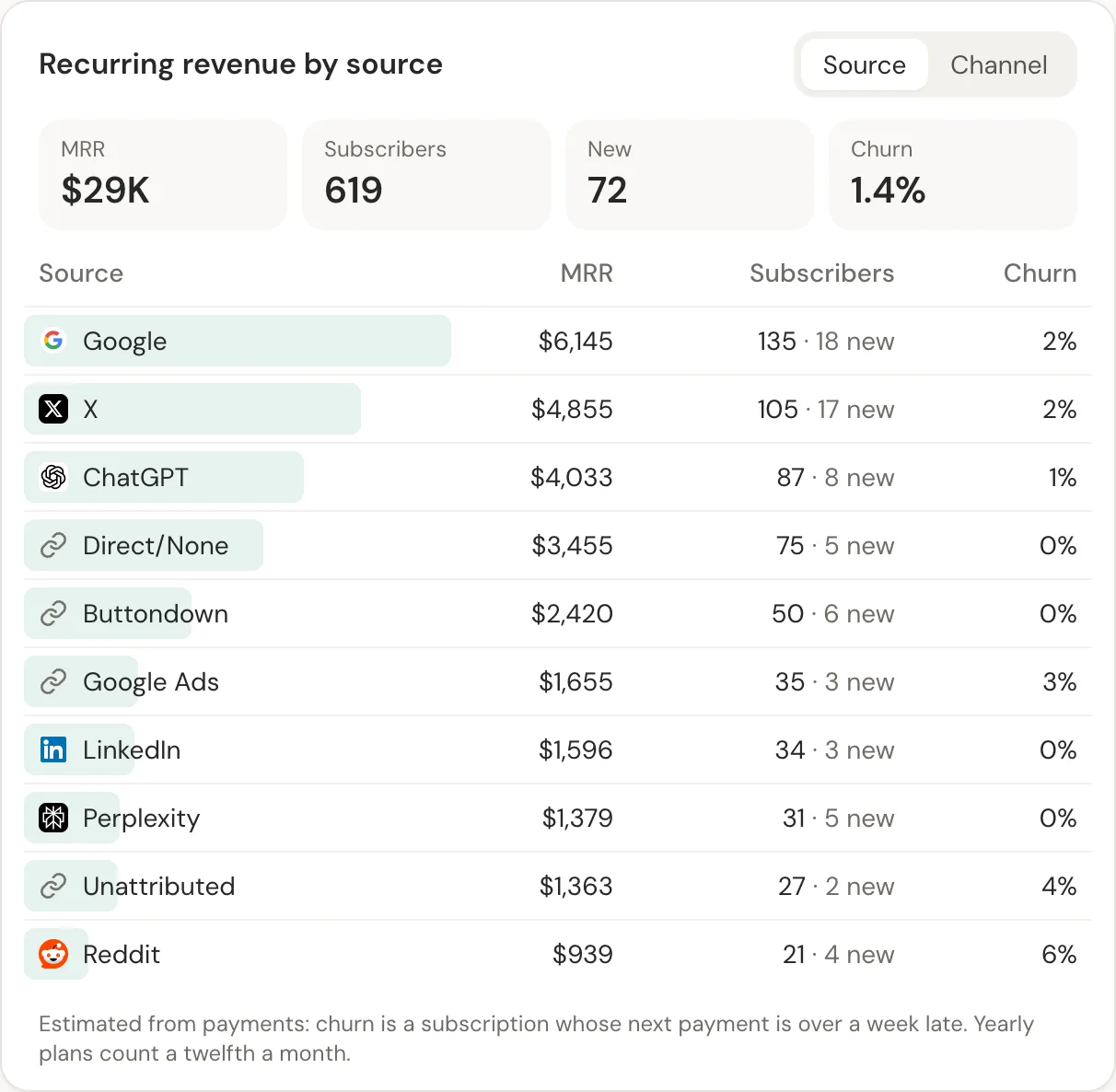
DataFair estimates MRR, new subscribers and churn by the source each customer first came from, using payments from Stripe, Paddle, Lemon Squeezy and other providers. How MRR by channel works. Combine it with revenue per visitor before deciding where to spend.
Reducing churn
- Fix early churn first: onboarding, activation, setting the right expectations in marketing.
- Offer yearly plans to customers who are already happy.
- Catch failed payments: involuntary churn from expired cards is often easy to recover.
- Spend less on channels with high churn, even if their signups look good.
Related guide: Revenue analytics: measure what pays, not just what visits.
Questions
- What is a good monthly churn rate for SaaS?
- It depends on your customers and pricing. Products for larger businesses typically churn less than low-priced products for individuals. Compare with similar businesses and your own trend.
- What is the difference between customer churn and revenue churn?
- Customer churn counts lost customers. Revenue churn measures lost MRR, which matters more when customers pay very different amounts.
- How does DataFair measure churn?
- From payments: a subscription counts as churned when its next payment is more than a week late. Your billing provider has the exact status.